Blog Archive

Crossing the Blues
Showing posts with label Hyundai. Show all posts

Hyundai Sonata Midsize Sports Sedan

Hyundai introduced its all-new Hyundai Sonata at the 2009 Los Angeles Auto Show. This marked the North American debut of the latest version of the popular midsize sedan, introducing Hyundai's "Fluidic Sculpture" design language and an all four-cylinder engine lineup to the U.S. market. Hyundai Sonata is the second vehicle in Hyundai's 24/7 version 2.0 product initiative (seven new models in the next 24 months) following on the heels of the all-new Tucson. Production of Hyundai Sonata will begin in December 2009 at Hyundai's U.S. plant in Alabama with retail sales beginning in January 2010.
Hyundai Sonata Midsize Sports Sedan
The new Sonata will launch with Hyundai's new Theta II GDI 2.4-liter four-cylinder engine with a Gasoline Direct-Injection (GDI) fuel delivery system, which contributes to improved fuel efficiency and lower emissions. Hyundai Sonata is the first midsize sedan to adopt GDI technology as standard equipment in a naturally aspirated powertain. This shorter, more direct path of fuel delivery, allows for greater control of the fuel mixture at the optimum moment, thus improving efficiency. The fuel is injected by a camshaft-driven, high pressure pump that operates at pressures up to 2,175 psi. Direct injection also utilizes a higher than normal 11.3:1 compression ratio for increased power. The pistons are "dished" to increase combustion efficiency in the cylinder. This powerplant will deliver best-in-class fuel economy, best-in-class four-cylinder horsepower and best-in-class torque.
The Sonata 2.0T, as the car is officially named, is powered by a new 2.0-liter Theta II twin-scroll turbocharged gasoline direct-injection (GDI) engine that produces 274 horsepower at 6,000 rpm and 269 lb-ft of torque from 1800-4500 rpm with regular fuel. The engine is linked to a six-speed automatic transmission with SHIFTRONIC manual control that drives the front wheels. No performance figures were released but Hyundai did announce that the Sonata 2.0T will deliver an estimated 22 mpg (10.7lt/100km) city and 34 mpg (6.9lt/100km) highway.
The 2.0-liter twin-scroll turbo engine will be available on the Sonata SE and Limited trim level, with the Limited getting additional upgrades, including a panoramic sunroof, 18-inch "hyper" silver alloy wheels, dual exhaust system and steering wheel-mounted paddle shifters.
Next year, Hyundai will add a 2.0-liter Theta II turbocharged GDI four-cylinder engine and a 2.4-liter Hybrid Blue Drive model featuring Hyundai's breakthrough lithium polymer battery pack. Details about these powertrains will be announced at the 2010 New York Auto Show. Hyundai Sonata's innovative segment first powertrain lineup is a key driver of Hyundai's goal to be the most fuel-efficient automaker on the planet.
Hyundai's commitment to making the Hyundai Sonata extremely fuel efficient continues with a six-speed automatic transmission with SHIFTRONIC manual control or a standard six-speed manual transaxle. Hyundai's all-new six-speed automatic A6MF2 transaxle helps the company meet its goals of improving fuel efficiency and reducing emissions. Shifts are silky-smooth with an option of manual control through the SHIFTRONIC feature.
Developed over a four-year period, this new six-speed automatic is 26.4 pounds lighter than the five-speed it replaces. It also is 1.6 inches shorter and considerably simpler, having 62 fewer parts, which is a key to increased durability, lighter weight and lower cost. When it comes to transmissions, more gears are definitely better. The addition of a sixth gear enables closer spacing between gear ratios providing a better balance of performance and fuel economy while the wide overall gear ratio helps deliver strong acceleration.
All Sonatas have column-mounted, motor-driven electric power steering that adjusts instantly to changing driving conditions while improving fuel economy over a conventional steering system. A quick-ratio steering rack is used for crisp feel on turn-in. Hyundai Sonata's turning diameter of 35.8 feet is better than Camry, Accord, Altima, Fusion and Malibu.
One of the program targets for the 2011 Sonata engineering team was world-class power-to-weight ratio. Power-to-weight ratio pays dividends in both performance and fuel economy. Hyundai Sonata is rich in ultra-high-strength steel, leading to world-class body rigidity. The 2011 Hyundai Sonata is 25 percent stiffer in torsion and 19 percent stiffer in bending rigidity than its predecessor, yet it is lighter than many midsize sedans, also offering more interior room.
The 2011 Sonata is a smart combination of superior styling, performance, safety and fuel efficiency. What’s more, it’s an affordable midsize car, putting a luxurious and rewarding driving experience within reach of many. Make the 2011 Sonata a part of your future.

New Hyundai Avante Sports Sedan

Hyundai Motor Co. had its world-premier of the all-new Hyundai Avante compact Sports sedan, the company's best-selling model worldwide, at the 2010 Busan International Motor Show. The fresh 2011 new Hyundai Avante, badged because Hyundai Elantra in commercialises largest Korea comes on Hyundai’s latest 1.6L Gamma gas Direct Injection locomotive and a 6-speed automatic drive to the front-wheel drive compact, the 1st time GDI and six-speed automatic rifle have been boasted on a contract sedan in Korea.
Hyundai Avante
The fresh Avante delivers a peak end product of 140ps and level best torque of 17.0kg-m. They are also almost 10 percent a lot fuel efficient than thems closest challengers, cheers to GDI, the six accelerate automatic and additional fuel economy sweetenings.The fresh Hyundai Avante will enchant and surprise on a raft of additional advanced characteristics not found on additional compacts, admitting HID (High Intensity Discharge) headlights, LED compounding lamps in the back, heated back end seats, puddle lamps and a color in TFT LCD entropy display nestled in the caliber cluster.
"The new Hyundai Avante encompasses Hyundai's latest ambitions, featuring the best styling and performance in its class," Steve S. Yang, President & CEO of Hyundai's Global Business Division, said at the Busan Exhibition and Convention Center (BEXCO) today. "We're confident that it will once again redefine the compact segment worldwide."
With sportier and even more elegant lines than its predecessor, the new Hyundai Avante - badged as Elantra in markets outside Korea - continues Hyundai's 'fluidic sculpture' design philosophy.
Hyundai has applied its latest 1.6L Gamma Gasoline Direct Injection engine and a 6-speed automatic transmission to the front-wheel drive compact, the first time GDI and six-speed automatic have been featured on a compact sedan in Korea. The new Avante delivers a peak output of 140ps and maximum torque of 17.0kg•m. It is also about 10 percent more fuel efficient than its closest competitors, thanks to GDI, the six speed automatic and other fuel economy enhancements.
The new Hyundai Avante will delight and surprise with a raft of other advanced features not found on other compacts, including HID (High Intensity Discharge) headlamps, LED combination lamps in the rear, heated rear seats, puddle lamps and a color TFT LCD information display nestled in the gauge cluster.
Under the Avante/Elantra badge, Hyundai has sold over 6 million units worldwide since the car's launch in 1990. Hyundai will begin sales of the all-new Hyundai Avante in the second half of 2010 in Korea.

2011 Hyundai Elantra – LA Auto Show

 2011 Hyundai Elantra – LA Auto Show
This week, 2011 Hyundai Elantra revealed the US-spec version at LA Auto Show. It powered by a 1.8-liter Nu engine backed by a Hyundai-developed 6-speed transmission or a 6-speed manual, the Elantra boasts a 40 mpg highway, and 29 mpg city fuel ratings on any and every model.

2011 Hyundai Elantra offer the car’s wheels will range from 15 to 17 inches, depending on the packages selected, while all models will get the 148-horse / 138 lb-ft engine that’s cleaner than some hybrids. Elantras in some states will be rated at 145 horsepower and 130 lb-ft of torque while earning the right to be classified as PZEVs (Partial Zero Emission Vehicles).

In interior passenger also can enjoy with equipment is available includes: a touchscreen nav system, iPod integration, segment-busting heated rear seats, and a 172-watt or 360-watt sound system, making the Elantra one potentially decked-out looker of a small car.

About price, began assembly this month down in Alabama, will be hitting lots before the end of 2010 with a starting MSRP of $14,830 (before a $730 delivery fee). That price includes standard stability control, traction control, anti-lock brakes, and a trunk-full of other electronic nannies.

2011 Hyundai Elantra

 2011 Hyundai Elantra
2011 Hyundai Elantra U.S-spec model gets a larger displacement 1.8-liter gasoline unit with conventional port fuel injection rated at 148-horsepower and 131 lb-ft of torque. Hyundai estimates that the U.S. model will return a highway efficiency of around 40mpg.

Unique Hyundai Genesis G37 Coupe

Apparently, Hyundai has its own version of cars. The Hyundai Genesis coupe looks and smells like the Infiniti G37 coupe. The two sport coupes look so similar that Edmund’s Insider Line decides to feature an article about them. The comparison includes comments like these:

Luxury Car Hyundai iX-Onic Concept Car


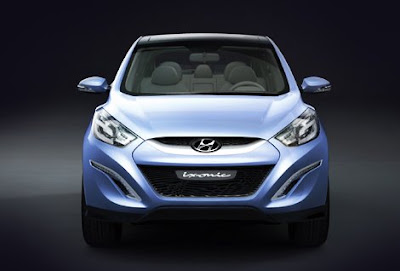
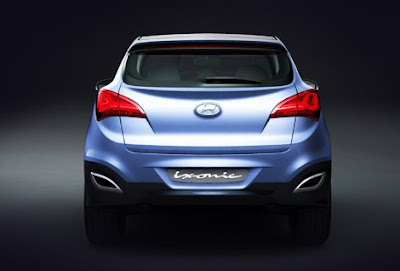
Hyundai ix-onic concept is a preview for the next generation Tucson crossover that will debut end of the year. Currently we don’t know how many styling cues will be taken from the concept to the production model, but we hope a lot. Questionable marketing decisions aside, the ix-onic, which previews the next Tucson crossover, is a winner. Aesthetically, it has some mildly derivative elements (the face has a certain Mazda quality about it), but it's a good-looking vehicle that comes off bigger and more muscular than its 173-inch length suggests. In other words, it's got presence.
The exterior also has some innovative touches, including headlamps with cool – if slightly contrived – moving internal elements (check out the video after the jump), and as well a coral-like asymmetrical grille mesh and very strong upswept greenhouse that shows off a clean, less hard-edged interior. That said, we could do without the heavy-handed chrome wheels that look like they were cribbed from the guys over at West Coast Customs.
Hyundai’s European designers have done a great job. ix-onic concept looks a lot bigger than it actually is. In fact it is only 4,400 mm long and 1,850 mm wide.
Interestingly, with the ix-onic, Hyundai designers are now going on record saying they are working toward defining a "hexagonal" front graphic as the company's new universal corporate face.
How the latter proclamation fits in with new offerings like the Genesis Sedan and Coupe or the Equus is something of an open question (perhaps this is just on designs for the European market), but as aesthetic signatures go, we can see this idea working to Hyundai's advantage, as the company's offerings currently don't really have a familial design element to tie them together.
The ix-onic – pronounced "ik-sonnik" – makes use of Hyundai's brand-new 1.6-liter GDi turbo four-cylinder, which routes its 168 horsepower through a six-speed double-clutch transmission (a bit of tech we don't recall seeing from Hyundai before), and the drivetrain has stop-start tech to help it yield a commendably low 149 grams-per-kilometer of C02. With Hyundai's previous admission that the company will move toward all direct-injection engines, we can expect to see this powerplant coming to America in the next Tucson, although perhaps not immediately.

Luxury Car Hyundai iX-Onic Concept Car Hyundai iX-Onic Concept Car - Rear View
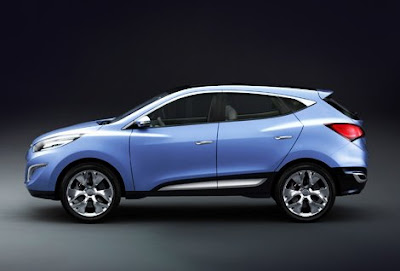
Luxury Car Hyundai iX-Onic Concept Car Hyundai iX-Onic Concept Car - Side View

Luxury Car Hyundai iX-Onic Concept Car Hyundai iX-Onic Concept Car - Front Left View
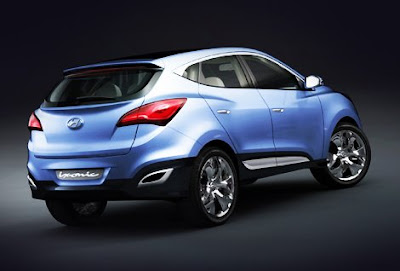
Luxury Car Hyundai iX-Onic Concept Car Hyundai iX-Onic Concept Car - Rear Right View
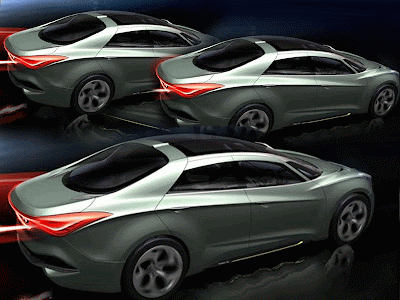
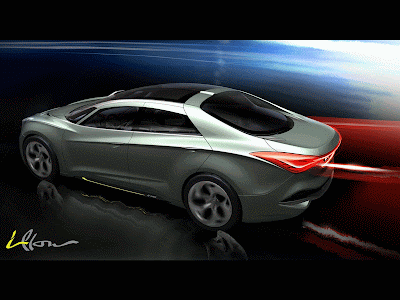
2010 Hyundai i-Flow Concept Diesel-Electric Hybrid Powertrain

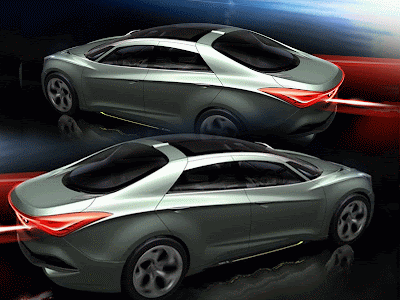
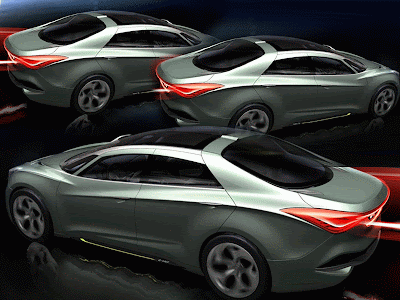
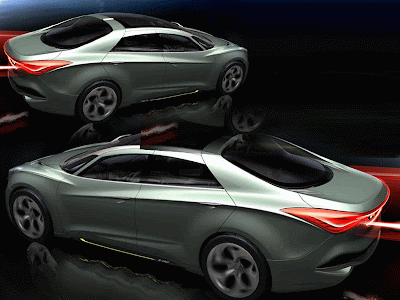
The Geneva Motor Show is quite generous in reveals this year, considering the trend of the automotive industry. Hyundai has just presented its new i-Flow Concept on the catwalk, continuing the company’s statement of developing a the “fluidic design”. As Hyundai continues to branch out into new segments, its European operation, which until recently has focused primarily on small cars, is debuting the Hyundai i-flow concept in Geneva. It's a vision of a coming Hyundai that's expected to do battle in Europe's larger D-segment.
2010 Hyundai i-Flow Concept Diesel-Electric Hybrid Powertrain
The i-flow is the latest concept to wear Hyundai's "fluidic sculpture" design language, and the large D-segment sedan wears it well. Hailing from Hyundai's European Design Headquarters in Russelsheim, Germany, the i-flow incorporates lightweight materials and solar cells from supplier BASF meant to reduce weight and increase energy efficiency.
2010 Hyundai i-Flow Concept Diesel-Electric Hybrid Powertrain
The i-flow is fitted with Hyundai's first-ever diesel hybrid drivetrain, in which a 1.7-liter diesel engine with dual-stage turbocharging is mated to Hyundai's Blue Drive hybrid system and a new six-speed dual-clutch gearbox. As we understand it, the i-flow is a parallel hybrid, allowing it to be powered by its lithium-polymer battery pack and electric motors, the diesel engine or a combination of both. Combined with a slippery 0.25 coefficient of drag, the i-flow will reportedly return 78.4 mpg and emit 0.30 grams of CO2 per mile.
2010 Hyundai i-Flow Concept Diesel-Electric Hybrid Powertrain
The new lines give an elegant avant-garde look, helping in the same time in reducing the CO2 emissions to 85g/km and improving its aerodynamics. In collaboration with chemical company BASF, Hyundai produced its first eco-friendly diesel hybrid powertrain, using high-technologies and next-generation materials. The new i-Flow combines perfectly the concept of a little-big car, as it shows a sporty looks but also provides quite enough space due to the use of a minimalistic design for the seats and center console.
2010 Hyundai i-Flow Concept Diesel-Electric Hybrid Powertrain
The high-tech engine presents the new 1.7-litre engine fitted with 2-stage turbocharging connected to a Lithium Ion-Polymer battery for a more efficient consumption, especially when driven i-flow’s six-speed, dual-clutch transmission. The i-Flow technology is a test bed for new energy harvesting ideas, ranging from flexible solar panel roofing to a thermo-electric generator which uses exhaust heat to produce power. More news of Hyundai’s star cars will be published in advance of the show and will be available on the stand.  The company’s press conference will take place in Hall 1 at 14:15 (CET) on Tuesday 2nd March  (2010).

Production Hyundai i-flow planned for 2011; showcar previews diesel hybrid system and new eco ideas


The Hyundai i-flow is one of the significant concept cars at Geneva, not just because it looks dramatic, but because under that heavily sculpted skin is a range of latest tech that could appear in Hyundai’s next generation of cars. Powering the i-flow is the company’s first diesel-electric hybrid powertrain consisting of a U2 1.7-litre oil burner with two-stage turbocharging and Hyundai’s lithium ion-polymer battery. Coupled to a six-speed, dual-clutch transmission, the drivetrain is capable of 33.3 km/l and a low CO2 output of 85g/km.


The i-flow is also a test bed for new energy harvesting ideas, ranging from a flexible solar panel roofing to a thermo-electric generator developed in partnership with leading chemical company BASF. One such idea is thermal engine encapsulation, which ensures that the engine reaches optimum operating temperature more quickly by retaining heat when the car is idle. Hyundai says that this translates into fuel savings and emissions cuts of 5% during summer and up to 9% in winter. The thermo-electric generator meanwhile recaptures energy from hot exhaust gases and converts it to electrical energy to help power auxiliary systems.


Designed at Hyundai’s European studio in Russelsheim, the i-flow sports the firm’s “fluidic sculpture” design language. With an overall length of 4,780 mm and a 2,800 mm wheelbase, the i-flow is a Honda Accord sized D-segment contender that is set to hit the market in 2011. It remains to be seen how much of the i-flow’s styling is retained for production, but things look promising with the recent Korean realisation that advanced design is as important as making competent cars.


Live pictures from Geneva and official images are after the jump!

2011 Modern Hyundai Equus wallpaper


Red Bull Racing: A closer look at Rhys Millen's Hyundai Genesis Coupe


PRESS RELEASE:

With enthusiasts eagerly awaiting the upcoming launch of the 2010 Genesis Coupe, Hyundai is adding to the excitement by teaming with Rhys Millen Racing and Red Bull Energy Drink to campaign the car in the high-energy sport of drift racing this year.

At the Chicago Auto Show, Hyundai unveiled its motorsports program in the U.S. with the help of drift champion Rhys Millen, who will fabricate and race a 550-horsepower Genesis Coupe in the Pikes Peak International Hill Climb, the Formula Drift Professional Drifting Championship and at select Redline Time Attack series events in 2009.

"Today's announcement puts the Genesis Coupe into three great motorsports series," said John Krafcik, acting president and CEO, Hyundai Motor America. "We like to refer to the Genesis Coupe as the sinister sibling to the North American Car of the Year, the Genesis sedan and we look forward to Rhys harnessing every ounce of energy in the Coupe as he campaigns it."

Millen and his team are an ideal match to launch Hyundai's racing efforts. Millen's driving credentials include movie stunts, multiple drifting championships, a Pikes Peak world record and his recent New Year's Eve Las Vegas truck flip. But behind Millen's success in the driver's seat is a full team of engineers and fabricators that know how to maximize the potential of a race car.

Millen had his first opportunity to test drive the Genesis Coupe's performance credentials when he performed precision driving for the car's debut advertising campaign. Millen flogged a Genesis Coupe for three days during the filming process at Road Atlanta racetrack, and the car never missed a beat.

"The Genesis Coupe Concept inspired me to seek out a relationship with Hyundai and it has developed into multiple projects," said Millen, professional race driver and founder of RMR. "The immediate focus is developing the RMR Red Bull Hyundai Genesis Coupe into a drift car with a 550-horsepower engine and a lightweight, rigid chassis. We are applying everything we know about fabricating into building this car."

THE CHASSIS BUILD

Six RMR employees have already stripped a Genesis Coupe to bare metal and the chassis has spent five days in an Alkali bath removing all rubber and adhesives. The chassis has also been stitch welded for added structural rigidity.

CARBON FIBER BODY PANELS

Millen quickly decided to take the already light weight Genesis Coupe and make it even lighter. His crew will take the molds used to build the "Art of Speed" SEMA car to once again replicate the Genesis Coupe's body out of carbon fiber. The hood, deck lid, roof, doors, fenders, front fascia and side skirts are all built out of carbon fiber. The carbon fiber panels range from 50 percent to 80 percent lighter than the sheet metal they replaced. For example, a factory Hyundai Genesis Coupe door weighs 68 pounds but modifications made by RMR reduce the door weight to just 8.5 pounds. This weight-saving approach is carried throughout the car without compromising its powerful curves, surface detail and "Z" bodyside line.

The side skirts have functional flat rocker panels with ducts to pull air out from underneath the car. A functional splitter on the front fascia and a built-in diffuser create pressure without drag. A rear diffuser with long tunnels keeps the air moving underneath the car. Downforce has been further increased by an APR GTC-500 rear wing that is fully adjustable and was designed using Computational Fluid Dynamics (CFD) analysis. The hood is vented to dissipate heat and Aerocatch hood latches are used for safety.

The rear widebody fenders are also made out of carbon fiber and blend seamlessly into the vehicle design with a creative painting concept. The goal curb for the car is 2,400 pounds.

INTERIOR

The interior of the RMR Red Bull Hyundai Genesis Coupe is unrecognizable from its origins as a well-appointed 2+2 coupe designed with everyday driving in mind. All comfort and convenience features are removed to make way for a custom-fabricated eight-point safety cage and firewall which reinforce the Genesis Coupe's already stiff chassis. By removing the roof, the RMR fabricators welded every aspect of the safety cage to the frame of the car. The braces on the A and B pillars also tie into the strength of the body. The safety cage is required for racing and a single Sparco racing seat further protects the driver in the overhauled cockpit.

SUSPENSION

The RMR Red Bull Hyundai Genesis Coupe utilizes a KW remote reservoir three-way adjustable coilover suspension. Adjustable chro-moly sway bars dial the suspension in further for true track performance. RMR also fabricated adjustable lower control arms, rear control arms and toe links to allow precise tuning of the chassis.

ENGINE AND TURBO KIT

The Hyundai Lambda 3.8-liter V6 engine, which comes standard on the Genesis Coupe 3.8, will be stroked to 4.1-liters and further enhanced by a Turbonetics turbocharger. An AEM engine management system will also be used. The engine will be mated to a HKS sequential transmission. The end result is a Genesis Coupe that will produce 550 horsepower and 520 lb.-ft. of torque.

WHEELS, TIRES AND BRAKES

To ensure that the enhanced power plant translates all the way to road performance, RMR added 18- by 8.5-inch front and 18- by 9.5-inch rear Enkei RPF1 light weight wheels and 225/40-18 Toyo Proxes R1R front tires and 265/40 Toyo Proxes R1R rear tires.

PAINT SCHEME

The paint scheme is a combination of blue, silver and unpainted black carbon fiber with its signature weave pattern.

ADDITIONAL SPONSORS

· Toyo Tires

· Genius Tools

· Sparco

· Royal Purple

· Turbonetics

· APR Performance

· KW Suspension

· AEM

· BC ( Brian Crower)

· Exedy

· Enkei Wheels

· JE Pistons

· The Driveshaft Shop.

RHYS MILLEN – DRIVER, OWNER RMR

With more than 16 years of racing experience, Rhys Millen has established himself as one of the premier rally/drifting drivers in North America. Born in New Zealand in 1972, Rhys is the son of famed rally and off-road racer Rod Millen. Rhys joined Rod in the U.S. as a teenager and soon afterwards established himself as racer by taking first at the Pikes Peak Hill Climb in the Open Division and winning Rookie of the Year. He won the Formula Drift championship in 2005 and was runner-up in 2006.

RHYS MILLEN CAREER HIGHLIGHTS - 2008

· Red Bull Drifting World Championship winner

· Pikes Peak Time Attack 2-Wheel Drive Champion (set new world record)

RHYS MILLEN CAREER HIGHLIGHTS - 2007

· Pikes Pike Time Attack Champion

· First Place - Long Beach Team Drift

· Second Place - Formula Drift, New Jersey

· Third Place - Formula Drift, West Virginia

RHYS MILLEN CAREER HIGHLIGHTS – 2006

· Formula Drift Champion Runner-Up

· Formula Drift Tires.com Triple Crown Champion

RHYS MILLEN CAREER HIGHLIGHTS – 2005

· Formula Drift Champion

· First Place - Formula Drift, New Jersey

· Second Place - Formula Drift, Irwindale

HYUNDAI MOTOR AMERICA

Hyundai Motor America, headquartered in Fountain Valley, Calif., is a subsidiary of Hyundai Motor Co. of South Korea. Hyundai vehicles are distributed throughout the United States by Hyundai Motor America and are sold and serviced through more than 780 dealerships nationwide.
More Photos


Other article:
Drifting 101 with world champion Rhys Millen
Hyundai Genesis Coupe to Star in Race-Inspired Super Bowl Ads
SEMA 2008: Hyundai Reveals Three Genesis Coupe Projects

2009 New York Auto Show: Hyundai Equus grand sedan


Hyundai unveiled the Equus grand sedan to a surprised audience at the 2009 New York International Auto Show.

#NYIAS Forget what you've heard. The Hyundai Equus is coming to the U.S., and when it does it'll be powered by a 5.0-liter V8 backed by an eight-speed automatic transmission.

"You didn't hear it from me," a source close to the project told Inside Line today during the New York auto show. "But you wouldn't be far off if you said the car was coming to the United States. Our chairman wants it."

The full-size sedan, which packs the size and luxury to top the Hyundai lineup, should hit the states in "two or three years" according to our source, but the problem right now is price. In Korea the car starts at the equivalent of $96,000, and taking on the Benz S-Class in America is not what Hyundai has in mind. At least not yet.
Read More


Other article:
Hyundai Equus to be offered in bulletproof spec
Hyundai ix-ONIC Concept in Geneva with Video
Mysterious Hyundai sedan spotted undisguised Spy
Hyundai's 7-Series? i70 prototype spied

New York Auto Show: Hyundai Nuvis Hybrid Concept


The wraps are off the Hyundai Nuvis crossover concept that made its world premiere at the 2009 New York Auto Show. Hyundai's futuristic proposal for a small three-door crossover is the eleventh concept car to come out of the company's Design Center in Irvine, California. According to the Korean automaker, apart from showing off various technologies such as the firm's proprietary parallel hybrid drive system, the Nuvis also hints at a possible design direction for a future-generation crossover. Though don't expect to see the gullwing doors nor the 22'' alloys finding their way into production.
Read More


Other article:
Hyundai Genesis Coupe Revealed in NY
Hyundai Genesis Coupe First Drive with video
Live webcast of Hyundai Genesis coupe press intro on Wednesday
2020 Hyundai City Car Concept
Hyundai Unveils Rear-Wheel Drive Concept Genesis Coupe
Hyundai Rear-Wheel-Drive Genesis Coupe Concept
All New Hyundai RWD Sports Coupe Spy Photos
Hyundai RWD Genesis Sports Coupe UNCOVERED
Hyundai Genesis Makes World Debut at 2008 NAIAS
Photos Leaked:Hyundai Genesis Coupe