Blog Archive

Crossing the Blues
Showing posts with label Hybrid Car. Show all posts

2010 Lotus Evora 414E Hybrid Sports Car Concept

This is the 2010 Lotus Evora 414E Hybrid, a new car that made its debut today at the Geneva Motor Show which aims to demonstrate how a hybrid car can have breathtaking performance from a highly efficient propulsion system. Lotus Evora 414E Hybrid is a full hybrid vehicle, which comes with twin electric motors.
2010 Lotus Evora 414E Hybrid
The new 414E Hybrid uses a high performance drivetrain system consisting of twin motors each delivering 204 hp (152 kW or 207 ps – this inspired the name 414E) and 400 Nm (295 lbft) of torque to each wheel via independent, single speed, reduction transmissions. With these numbers the car can accelerate from 0 to 60 mph in just 4.0 seconds.
2010 Lotus Evora 414E Hybrid
The Evora 414E Hybrid is a concept car that is equipped with a 7-speed transmission and two drive settings, including Eco and Sport. The vehicle is mainly maid in a copper color, which is used not only in the exterior but also interior of the concept, including the instrument panel, seat covers and brake calipers.
2010 Lotus Evora 414E Hybrid
The new car can be charged via a typical household plug or the car’s onboard generator. An additional range is provided by the Lotus Range Extender engine, an optimised 1.2 litre, three-cylinder engine capable to deliver (48 ps/47 hp). The Lotus Evora 414E Hybrid has a total range of 480 km (300 miles) and can be driven as a fully-electric car for about 56 km or 35 miles.
2010 Lotus Evora 414E Hybrid
Also, the car features HALOsonic Internal and External Electronic Sound Synthesis technologies from Lotus and Harman International, which means that it will provide sound contouring within the cabin and improve pedestrian safety outside the vehicle. The car comes with a sports mode that can simulate a 7 speed, paddle shift transmission combining exceptional driver involvement for a hybrid sports car.
2010 Lotus Evora 414E Hybrid
Dr Robert Hentschel, Director of Lotus Engineering said: “Innovation has always been at the heart of Lotus and is needed now more than ever. The Evora 414E Hybrid is the perfect demonstration of Lotus Engineering’s core competencies: lightweight architectures, efficient performance, electrical and electronics integration and driving dynamics. 
2010 Lotus Evora 414E Hybrid
The technology demonstrator represents an encapsulation of the advanced technologies that Lotus Engineering continues to develop to overcome the current environmental challenges facing the automotive industry and showcases the future direction that the sector is taking and why Lotus Engineering is perfectly placed to lead the technological development in this area.” 
2010 Lotus Evora 414E Hybrid

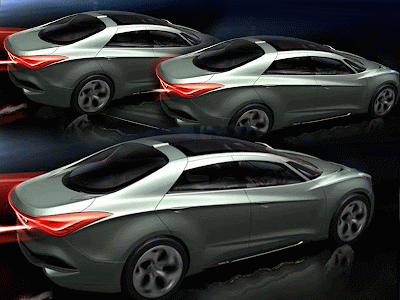
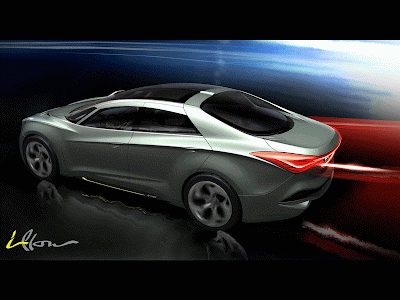
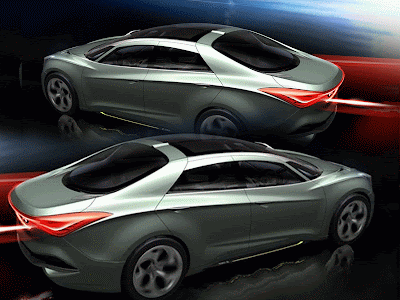
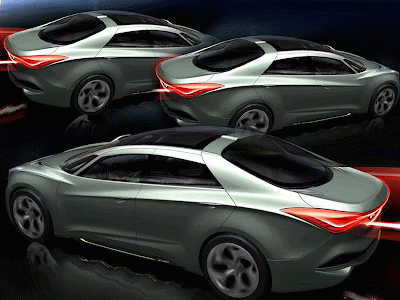
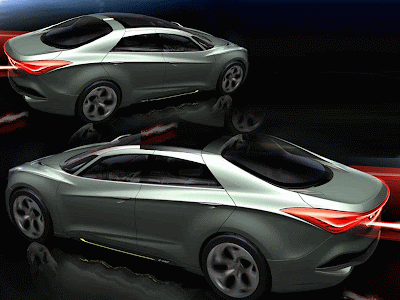
2010 Hyundai i-Flow Concept Diesel-Electric Hybrid Powertrain

The Geneva Motor Show is quite generous in reveals this year, considering the trend of the automotive industry. Hyundai has just presented its new i-Flow Concept on the catwalk, continuing the company’s statement of developing a the “fluidic design”. As Hyundai continues to branch out into new segments, its European operation, which until recently has focused primarily on small cars, is debuting the Hyundai i-flow concept in Geneva. It's a vision of a coming Hyundai that's expected to do battle in Europe's larger D-segment.
2010 Hyundai i-Flow Concept Diesel-Electric Hybrid Powertrain
The i-flow is the latest concept to wear Hyundai's "fluidic sculpture" design language, and the large D-segment sedan wears it well. Hailing from Hyundai's European Design Headquarters in Russelsheim, Germany, the i-flow incorporates lightweight materials and solar cells from supplier BASF meant to reduce weight and increase energy efficiency.
2010 Hyundai i-Flow Concept Diesel-Electric Hybrid Powertrain
The i-flow is fitted with Hyundai's first-ever diesel hybrid drivetrain, in which a 1.7-liter diesel engine with dual-stage turbocharging is mated to Hyundai's Blue Drive hybrid system and a new six-speed dual-clutch gearbox. As we understand it, the i-flow is a parallel hybrid, allowing it to be powered by its lithium-polymer battery pack and electric motors, the diesel engine or a combination of both. Combined with a slippery 0.25 coefficient of drag, the i-flow will reportedly return 78.4 mpg and emit 0.30 grams of CO2 per mile.
2010 Hyundai i-Flow Concept Diesel-Electric Hybrid Powertrain
The new lines give an elegant avant-garde look, helping in the same time in reducing the CO2 emissions to 85g/km and improving its aerodynamics. In collaboration with chemical company BASF, Hyundai produced its first eco-friendly diesel hybrid powertrain, using high-technologies and next-generation materials. The new i-Flow combines perfectly the concept of a little-big car, as it shows a sporty looks but also provides quite enough space due to the use of a minimalistic design for the seats and center console.
2010 Hyundai i-Flow Concept Diesel-Electric Hybrid Powertrain
The high-tech engine presents the new 1.7-litre engine fitted with 2-stage turbocharging connected to a Lithium Ion-Polymer battery for a more efficient consumption, especially when driven i-flow’s six-speed, dual-clutch transmission. The i-Flow technology is a test bed for new energy harvesting ideas, ranging from flexible solar panel roofing to a thermo-electric generator which uses exhaust heat to produce power. More news of Hyundai’s star cars will be published in advance of the show and will be available on the stand.  The company’s press conference will take place in Hall 1 at 14:15 (CET) on Tuesday 2nd March  (2010).

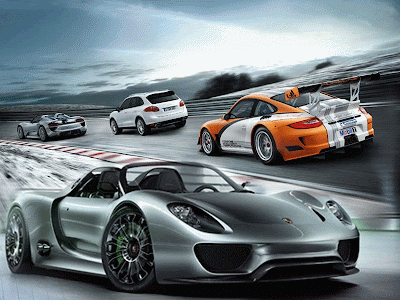
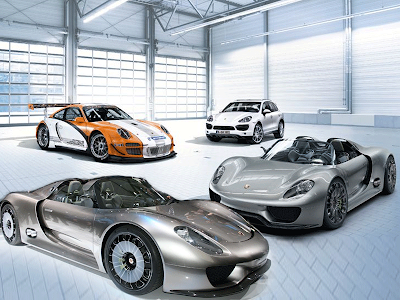
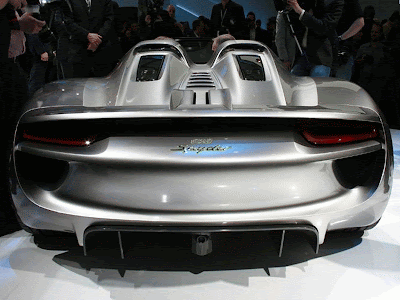
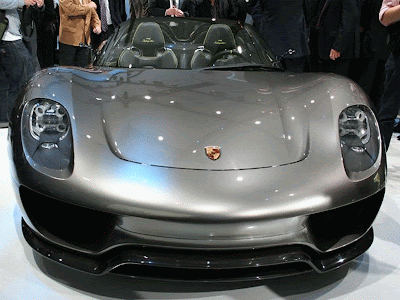
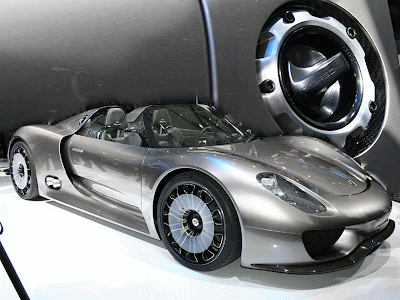
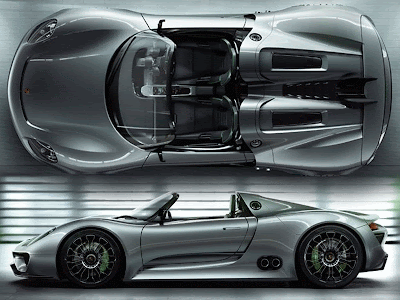
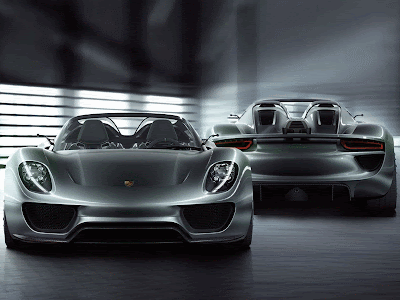
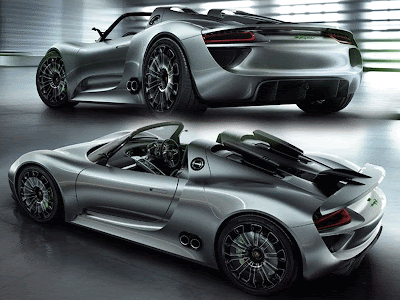
2011 Porsche 918 Spyder Hybrid Concept Next-Gen Porsche Supercar

The 2011 Porsche 918 hybrid concept is set to debut tomorrow at the 2010 Geneva Motor Show. This is not your average hybrid like Toyota Prius or Honda Insight. With four other debuts planned for this year’s Geneva auto show, Porsche saved one surprise for just before the show opened. Behold the 918 Spyder concept, a radical Carrera GT–like supercar that employs Porsche’s latest take on enviro-firendly performance technology.
2011 Porsche 918 Spyder Hybrid Concept Next-Gen Porsche Supercar

"The strategic aim is to demonstrate that even a supercar can be environmentally friendly. Porsche 918 hybrid concept promises total driving pleasure—and a clear conscience. This is a trendsetting and sustainable premium product that uses the issue of social acceptability to its advantage. And it reflects the legacy of Ferry Porsche, who was convinced that sports cars would never go out of fashion.”
2011 Porsche 918 Spyder Hybrid Concept Next-Gen Porsche Supercar

“In a way, the 918 is two cars in one,” explains the soft-spoken design director. “Its character can change from mild to wild and vice versa—mild as in wafting along in eco mode, wild as in switching the drive program selector to sport or race. In mild, the car benefits from the relatively low weight and strong aerodynamic performance. In wild, it improves downforce and stability by extending the adjustable wing, and it raises the two ram-air intake scoops to further enhance thermodynamic efficiency. 
2011 Porsche 918 Spyder Hybrid Concept Next-Gen Porsche Supercar

Design-wise, it was our mission to visualize a brand-new, unique, and revolutionary vehicle concept. Big wheels were a must, the stance had to be positively ground-hugging, and an unmistakable front end was imperative, as was a pacesetting mix of classic curvatures and contemporary creases. There is no doubt that the Porsche 918 Spyder marks an important evolution of our design language, certain elements of which are bound to appear on future production models.
2011 Porsche 918 Spyder Hybrid Concept Next-Gen Porsche Supercar

Moving in the same direction as Ferrari with its 599 Hybrid concept, Porsche is laying its cards on the table with this dual-purpose supercar plug-in hybrid. Said to “combine high-tech racing features with electric mobility to offer a fascinating range of qualities,” the 918 Spyder concept borrows the mid-mounted 3.4-liter V-8 engine from the RS Spyder race car, singing a symphony of 500 hp up to a 9200-rpm redline. That covers the race portion of the equation, while electric motors found at both the front and rear axles that combine for an output of 218 hp handle the electric mobility. These motors, able to move the car on electric power alone, make the 918 a full hybrid, which Porsche claims has a range of 16 miles using the liquid-cooled lithium-ion battery found behind the passenger compartment. Porsche claims the concept is capable of hitting 62 mph in under 3.2 seconds, topping out at 198 mph, lapping the Nürburgring in 7 minutes and 30 seconds (faster than a Carrera GT), and achieving fuel economy of up to 78 mpg, but certainly not while laying down those figures.
2011 Porsche 918 Spyder Hybrid Concept Next-Gen Porsche Supercar

In parallel-hybrid rear-wheel-drive mode, the superclever Porsche can run on gasoline, on electricity, or on a combination thereof. The front wheels, though, are driven on demand by the so-called electric portal axle. A button on the steering wheel allows the driver to handle the 918’s multiple-personality disorder, selecting from E-Drive, Hybrid, Sport Hybrid, and Race Hybrid modes. E-Drive is exactly that, using the stored energy in the batteries that’s supplied through plugging the car in at home or captured from regenerative braking. Hybrid mode combines the two drive systems, allowing the driver to either conserve fuel or flog the car to their heart’s content. Sport Hybrid is a step to the performance side using both gas and electric systems with power biased to the rear wheels and torque vectoring for improved handling. Greenies need not apply to the Race Hybrid setting, which squeezes out every bit of oomph from all onboard systems and even features an “E-Boost” push-to-pass button that feeds additional electric power for overtaking. As if the 500-hp gas motor needed any help.
2011 Porsche 918 Spyder Hybrid Concept Next-Gen Porsche Supercar

If required, the mighty V-8 can even act as a supersize range extender -- by driving the rear electric motor, which in turn supplies the lithium-ion batteries. In E-mode and with the batteries fully charged, a feather-footed driver can achieve a zero-emissions range of up to fifteen miles. The plug-in charge time varies from two to seven hours, depending on the available voltage. The green-colored brake calipers advertise the energy-regeneration system, which feeds the battery pack behind the seats. The energy cells are also charged when the vehicle is coasting.
2011 Porsche 918 Spyder Hybrid Concept Next-Gen Porsche Supercar

The concept also uses advanced features like variable aerodynamics for increased efficiency and added downforce at high speeds, as well as a Range Manager that uses the navigation system to present the predicted range the car is able to roam in its various modes.

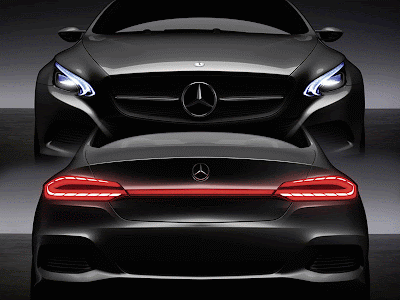
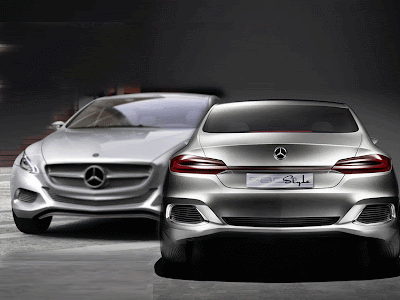
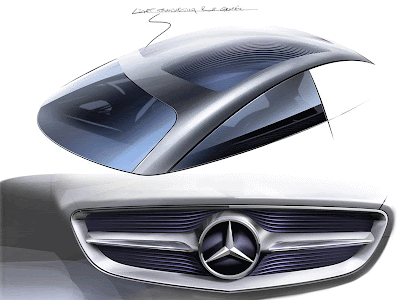
2010 Mercedes-Benz F800 Style Concept combination with the very powerful Plug-in Hybrid drive system

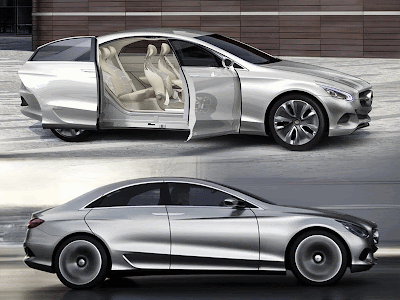
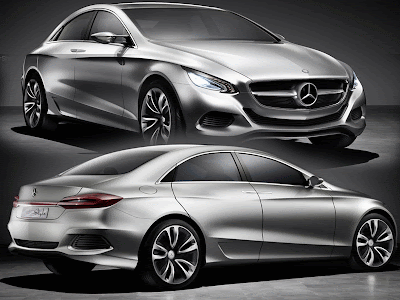
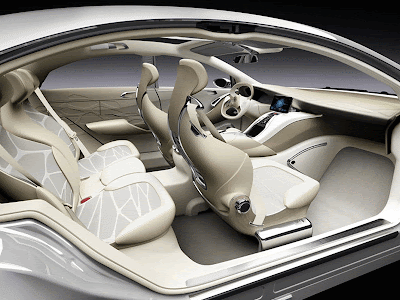
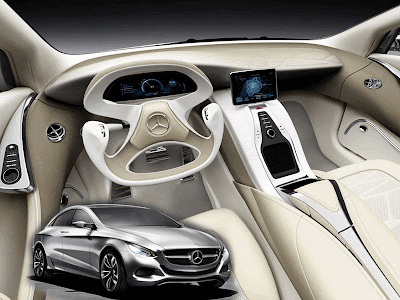
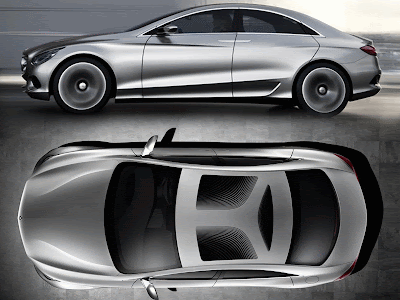
Mercedes-Benz F800 Style Concept is showing the future of premium automobiles from a new perspective, as the five-seat premium sedan combines highly efficient drive technologies with unparalleled safety and convenience features and an emotive design idiom, which interprets current Mercedes-Benz styling in line with the brand's hallmark attribute of refined performance. The F800 Style has a spacious interior full of intelligent seating, operating, and display concepts. Another unique feature of the large sedan is an all-new multi drive platform, which accommodates electric drives with fuel cells (enabling ranges of almost 375 miles) as well as the use of Plug-in Hybrids that can drive for up to 18 miles solely on electricity. Both variants of the Mercedes-Benz F800 Style Concept therefore make locally emission-free mobility possible at the level of a premium-class automobile, while at the same time being fully suited for everyday driving and providing a dynamic driving experience.
2010 Mercedes-Benz F800 Style Concept
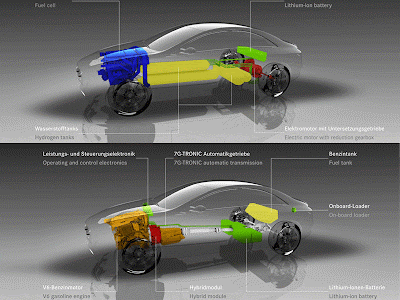
Within the 15.5-foot external length of the Mercedes F800 Style Concept, all of the components of the vehicle's efficient and environmentally compatible alternative drives (Plug-in Hybrid or fuel cell drive system) are installed in a space-saving manner in the engine compartment and the gaps within the chassis. Each of the drive systems takes up comparatively little space for the installation. This applies in particular to the electric drive with fuel cell, which has been enhanced by Mercedes-Benz to be compact and powerful. The front end's compact package was made possible through the consistent downsizing of all F-CELL components. As a result, the entire interior space is preserved and offers plenty of room for five occupants.
2010 Mercedes-Benz F800 Style Concept
In combination with the very powerful Plug-in Hybrid drive system, the Mercedes F800 Style Concept is a very dynamic expression of the concept of "fascination and responsibility." Its drive unit consists of a V6 gasoline engine with an output of 300 hp with next-generation direct injection and a hybrid module with an output 109 hp so that it delivers a total power of around 409 hp. The lithium-ion battery with a storage capacity of >10 kWh can be recharged either at a charging station or a household power socket. Thanks to its powerful and high-torque hybrid module, in the city the Mercedes-Benz F800 Style Concept can run exclusively on electricity, therefore without generating any local emissions. Because it also has high torque right from the moment it starts, the vehicle has the same driving performance as a car with a V6 gasoline engine even when operating in electric mode. The Mercedes-Benz F800 Style Concept with the Plug-in Hybrid can run purely on electricity for up to 18 miles. The F800 Style research vehicle therefore marks a further important step in the creation of a market-ready Plug-in Hybrid. Mercedes-Benz will begin series production of the S500 Plug-in Hybrid with the introduction of the next-generation S-Class.
2010 Mercedes-Benz F800 Style Concept
Due to its efficient drive system and a CO2 bonus for the battery-electric driving mode, the vehicle has a certified fuel consumption of only 2.9 liters of gasoline per 100 kilometers. This corresponds to extremely low CO2 emissions of only 68 grams per kilometer. However, thanks to its outstanding efficiency, the Mercedes-Benz F800 Style Concept equipped with a Plug-in Hybrid nevertheless has a driving performance comparable to a sports car (0-60 mph 4.7 s, top speed of 155 mph). When in electric mode, the Mercedes-Benz F800 Style Concept has a top speed of 75 mph, thus meeting the needs associated with long-distance driving.
2010 Mercedes-Benz F800 Style Concept
The electric drive components in the Mercedes-Benz F800 Style Concept with the Plug-in Hybrid once again demonstrate the versatility of Mercedes-Benz' extensively scalable modular hybrid system. The hybrid system can be expanded in various ways, depending on performance needs and the area of application. On this basis, it is possible to combine hybrid modules and batteries of different performance ratings with fuel-efficient, high-torque gasoline and diesel engines. Examples range from the current mild hybrids all the way to Plug-in Hybrids that enable pure electric driving over long distances. In developing the Mercedes-Benz F800 Style Concept with Plug-in Hybrid, the Mercedes engineers specifically focused on improving the pure electric driving in urban traffic. Thanks to high power reserves, the F800 Style in e-mode easily masters all kinds of city traffic while producing no local emissions. With the new hybrid module, the top speed of the Mercedes F800 Style Concept with Plug-in Hybrid has been increased to 75 mph in electric mode compared to the Vision S500 Plug-in Hybrid. At the same time, it emits only 68 grams of CO2 per kilometer, compared to the latter vehicle's 74 grams per kilometer.
2010 Mercedes-Benz F800 Style Concept
The F800 Style also offers clean driving pleasure in the variant equipped with an electric drive based on fuel cell technology. The vehicle's electric motor develops around 136 hp as well as a strong torque of approximately 214 lb-ft. The fuel cell generates the traction current by chemically reacting hydrogen with oxygen onboard the vehicle, producing water vapor in the process as the only emission.
2010 Mercedes-Benz F800 Style Concept
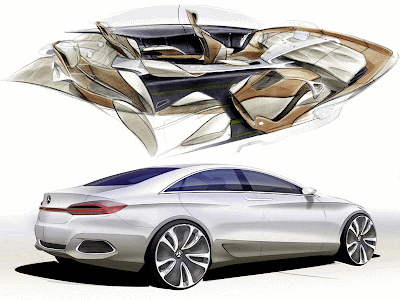
The new cam touchpad HMI is an intelligent expansion of the COMAND system. For many years now, Mercedes-Benz has been forging ahead with the development of innovative operating and display systems. A particularly user-friendly innovation is being presented in the Mercedes-Benz F800 Style Concept. The HMI unit here consists of a touchpad on the center console and a camera that records video images of the user's hand as it works the pad. The live image of the hand is presented in transparent form in the central display above the console. The user sees the contours of his or her fingers glide across the image without covering anything, thus ensuring that all of the functions of the currently used menu remain visible so that they can be easily operated by applying slight pressure to the touchpad. Pressing the display with one's fingers generates a feeling similar to that of touching laptop keys so that users know when they are carrying out specific actions.
2010 Mercedes-Benz F800 Style Concept
Another very user-friendly innovation created by the Mercedes engineers is the "Range on Map" function, which shows the remaining possible travel radius during electric vehicle operation as a 360° depiction on a map. Should municipalities only permit purely electric automobile traffic in the future, the driver can determine whether the electric range of his or her vehicle is sufficient for the journey into and out of the urban area by means of the Range on Map function. The system provides this function by combining information on the current battery charge level with data from the navigation system.
2010 Mercedes-Benz F800 Style Concept
Mercedes-Benz introduced DISTRONIC PLUS, the world's first proximity and speed control system that operates even when the car is standing still. The system substantially reduces the stress for drivers in dense traffic, as it regulates the distance from the vehicle in front even at very low speeds all the way down to a standstill. With its new DISTRONIC PLUS Traffic Jam Assistant feature in the F800 Style, Mercedes-Benz has also become the world's first automaker to implement a system that is also capable of automatically following the vehicle in front of it into curves. The system recognizes the difference between driving along curving roads and turning, which means it does not "blindly" follow the vehicle up in front — for example, when it changes lanes in order to exit the highway.
2010 Mercedes-Benz F800 Style Concept
While the Traffic Jam Assistant heightens comfort and active safety, the innovative protective system known as PRE-SAFE 360° further improves passive safety. PRE-SAFE 360° is based on the proactive occupant protection system PRE SAFE® developed by Mercedes-Benz. Unlike the previous system, PRE-SAFE 360° also monitors the area behind the vehicle. As a result, the system engages the brakes around 600 milliseconds before an anticipated rear-end collision occurs.
2010 Mercedes-Benz F800 Style Concept
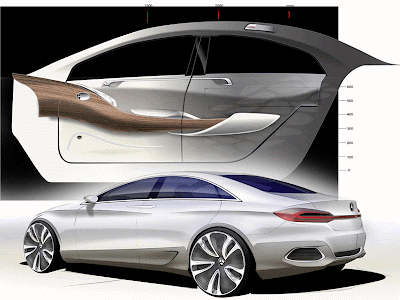
The Mercedes-Benz F800 Style Concept is both a technology platform and a showcar. This research vehicle was created through close cooperation between technical research and advanced engineering departments and the advanced design studios in Sindelfingen, Germany and Como, Italy. Its exterior appearance is marked by a long wheelbase, short body overhangs, and a sensually flowing roof line.

2010 Kia Ray Plug-in New Hybrid Concept EcoDynamics

CHICAGO, February 10, 2010 – Kia Motors America (KMA) today unveiled the Ray Plug-in Hybrid concept during a press conference at the 2010 Chicago Auto Show, advancing momentum of Kia Motors' global alternative fuel and powertrain research program, and its sub-brand coined 'EcoDynamics,' to develop innovative fuel-stretching and emissions-cutting technologies. 
 2010 Kia Ray Plug-in New Hybrid Concept EcoDynamics
The most efficient Kia vehicles with significant fuel consumption and emission reductions developed under the EcoDynamics sub-brand will be identified with the EcoDynamics badge. Recently, the EcoDynamics sub-brand took a major step forward with the introduction of the Kia Borrego Fuel Cell Electric Vehicle (FCEV) followed by the Forte LPI Hybrid, the gasoline Kia cee'd Hybrid and the twin-turbo diesel Kia Sorento Hybrid.
 2010 Kia Ray Plug-in New Hybrid Concept EcoDynamics
Kia Ray Plug-in Hybrid Concept is designed in a lowered mono-volume curvaceous shape for improved aerodynamics, while the use of lightweight and eco-friendly recycled materials is what had made it called EcoDynamics. 
 2010 Kia Ray Plug-in New Hybrid Concept EcoDynamics
To support this, the Ray” employs new “cool car” technology, including nano-laminate films and cool-glazing materials to reduce solar heat and demonstrate how keeping the interior cool while reducing air conditioning loads and greenhouse emissions. In addition, The “Ray” interior is also stuffed with eco-friendly recycled materials, which is strengthened by green technology feature of the all-new GreenEdgeTM system by Infinity® Audio.
 2010 Kia Ray Plug-in New Hybrid Concept EcoDynamics
Kia Ray Plug-in Hybrid Concept is powered by an all-aluminum 153-horsepower Gasoline Direct Injection (GDI) 1.4-litre engine mated to a permanently-engaged fixed ratio Continuously Variable Transmission (CVT), which is used in combination with a 78kw electric motor. 
 2010 Kia Ray Plug-in New Hybrid Concept EcoDynamics
To encourage economical driving, the “Ray” is equipped with an engine-power saving alternator management system and a toggle gear-shift indicator. Moreover, the custom-designed low-rolling resistance tyres with a hexagon pattern in narrow 20-inch (195/50R20) construction also contribute to improve efficiency.
 2010 Kia Ray Plug-in New Hybrid Concept EcoDynamics

2010 Citroën DS High Rider Diesel Hybrid Concept Car

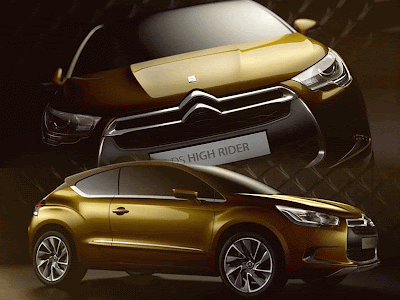
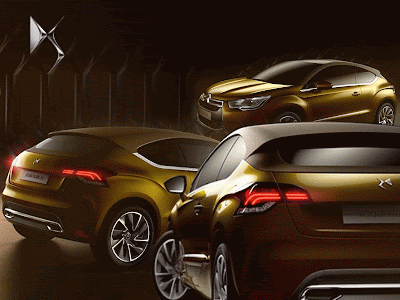
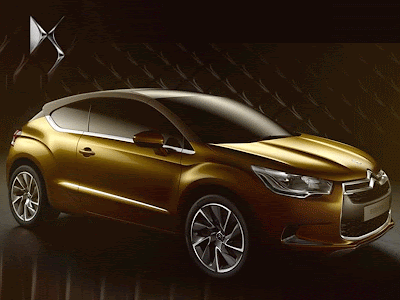
Citroën has released first details on the striking Citroën DS High Rider diesel hybrid Concept that will be unveiled at the 2010 Geneva Motor Show. It is the second concept associated with Citroën's innovative and distinctively styled DS line, after last year's DS Inside.  The Inside design study led to the DS3. The concept is expected to be the precursor to the Citroen DS4.
2010 Citroën DS High Rider Diesel Hybrid Concept Car

Without denying the appeal of conventional coupés, Citroën DS High Rider Concept represents a bold and radical vision of the future, combining compact dimensions with generous internal volumes, dynamic performance, sophisticated style and consummate quality.
2010 Citroën DS High Rider Diesel Hybrid Concept Car

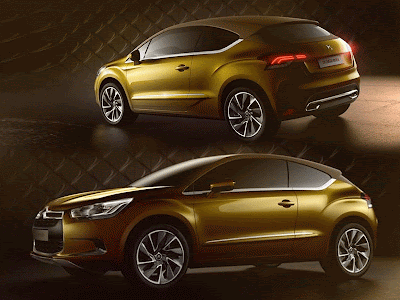
Unlike traditional 4-seater coupés, with their long, low design, the Citroën DS High Rider Concept is compact and muscular. Its character is expressed in its unique driving sensations, with a sleek flowing windscreen that soars over the heads of front occupants - hinting at a bright and spacious cabin environment. The apparently continuous glazed area of the side windows connects the A-pillars to the gently sloping roof line of the rear.
2010 Citroën DS High Rider Diesel Hybrid Concept Car

Citroen's newcomer rides on  19" alloy wheels and beautifully in proportion, Citroën DS High Rider Concept's confident profile is characterised by its high waistline. Its front end is purposeful with gaping air intakes, long incisive headlights and defined ridges along the bonnet.
2010 Citroën DS High Rider Diesel Hybrid Concept Car

Citroën DS High Rider Concept is an expression of automotive luxury and elegance - exemplified by its glossy golden paintwork and brushed chrome trim that accentuate the car's flowing lines. The roof is covered with a coated textile material - to give it a more "quality" look. Just 4.26m long, 1.82m wide & 1.48m high, Citroën DS High Rider Concept combines a neat and nimble chassis, for responsive handling, with intelligent design architecture that provides occupants with a generous amount of internal space.
2010 Citroën DS High Rider Diesel Hybrid Concept Car

2010 Citroën DS High Rider Concept's ability to rise above conventional design constraints is also reflected in its choice of power. Offering an enjoyable driving experience with dynamic on-road performance, Citroën DS High Rider Concept is respectful of the environment with an advanced 'Full Hybrid' diesel drivetrain that combines a refined HDi DPFS engine under the bonnet with an electric motor located on the rear axle. 
2010 Citroën DS High Rider Diesel Hybrid Concept Car

The hybrid platform enables Citroën DS High Rider Concept to combine the fuel efficiency and power of an HDi diesel engine with the ecological benefits of a new generation electric ZEV (Zero Emission Vehicle). Under certain conditions, both engines combine to deliver additional power with additional torque transmitted to the rear wheels.

2010 Peugeot 5 Concept HYbrid4 Technology

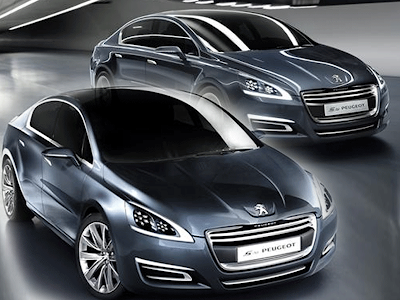
As part of its new Marque project, Peugeot is launching a double product offensive: the development of new markets and the strengthening of its presence in its historic market segments. The Peugeot 5 Concept car is another indication of the changing face of Peugeot and provides an insight into the Marque's future ambitions in the large luxury vehicle segment. Its pure and elegant lines blend with subtle technical detailing to create an overall effect of a timeless, exclusive and modern design.
2010 Peugeot 5 Concept HYbrid4 Technology

A 2.0 litre HDi FAP163 bhp diesel engine, mounted at the front of the vehicle, is combined with a 37 bhp electric motor at the rear. This arrangement provides an overall maximum power of 200 bhp, an electric only mode for low speed operation, four-wheel drive when required, and low fuel consumption and emissions of 74.3 mpg and 99 g/km of CO2 or zero in electric mode. Powered by the automaker's forthcoming HYbrid4 technology, the new 5 by Peugeot features a 163 horsepower 2.0-liter HDi diesel engine driving the front wheels and a 37 horsepower electric motor on the rear axle. This arrangement provides a peak output of 200 horsepower, an electric only mode for low speed operation, all-wheel drive traction when required and a fuel economy of up to 74.3 mpg.
2010 Peugeot 5 Concept HYbrid4 Technology

Its dimensions, proportions and styling are a direct response to the changing trends in the large luxury saloon car market segment. It reflects the continual search for more status, quality and performance, combined with a modernity that encompasses the vehicle's general efficiency in terms of architecture, engines and styling. The'5 BY PEUGEOT' expresses the Marque's vision and experience in the large touring car market. This concept car is designed and built to have both elegance and precision, but without in any way sacrificing the personality and dynamism so beloved of the Peugeot Marque. The emotion aroused by its exterior design holds the promise of exceptional interior space, convenience and comfort.
2010 Peugeot 5 Concept HYbrid4 Technology

At the front, the interpretation of the Marque's traditional feline appearance is spectacular; 'LED' lights are highlighted by the use of illuminated surrounds that blend perfectly with the overall exterior body styling. The headlamps frame a unique front grille design, whose visual appearance is closely influenced by the Peugeot SR1 concept car. The innovative design of the front grille gives the impression that it is detached from the vehicle; it appears to be suspended in front of the car. The new revised Lion badge naturally takes pride of place in a specially shaped area at the front of the long aluminium bonnet.
2010 Peugeot 5 Concept HYbrid4 Technology

The streamlined sides of the car are enhanced further by the bevelled, brushed-aluminium window surrounds and door handles, combined with sculpted 19'' wheel trims. The rear design of the vehicle suggests both robustness and power. The bold design of rear lights, consisting of three separate linked light clusters, clearly distinguish the vehicle at night, but also provides a link back to some of the Marque's historic models.
2010 Peugeot 5 Concept HYbrid4 Technology

Peugeot 5 Concept is further proof of Peugeot's environmental strategy. The modular technology of the Hybrid4 system can be combined with a range of naturally-aspirated engines according to market requirements, and can be fitted to different body shapes and different platforms, helping to ensure future driving enjoyment.
2010 Peugeot 5 Concept HYbrid4 Technology

The elegance, precision and dynamic appearance of the car's exterior styling is also reflected in the car's technical specification. The '5 BY PEUGEOT' concept incorporates Peugeot's HYbrid4 technology which, will be launched in 2011 in the Peugeot 3008.
2010 Peugeot 5 Concept HYbrid4 Technology