Blog Archive

Crossing the Blues
Showing posts with label Race Car. Show all posts

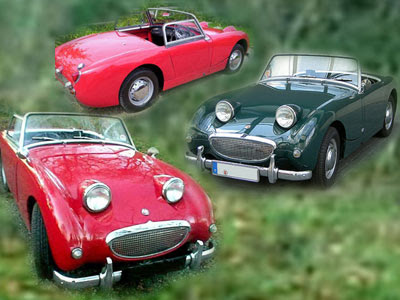
Frogeye Sprite Austin Healey the first of several Sprite models


Frogeye Sprite Austin Healey

Frogeye Sprite Austin Healey the first of several Sprite models.
The Austin Healey Sprite which was introduced in 1958 was a diminutive roadster with an unmistakable headlight arrangement.
The prominent headlights were initially intended to be flip-up units. However the cost of retractable headlights was to high, and instead they were fixed in what would have been the 'up' position. Their unusual location gave rise to the cars affectionate nickname, the "Frogeye" Sprite.
The Austin Healey Sprite MK I was powered by a 1.0 litre, inline, four cylinder engine which developed a grand total of 43 horsepower. Coupled to a four speed manual gearbox it was capable of propelling the car up to 84 mph.
The Frogeye Sprite (which was discontinued in 1961) was the first of several Sprite models. In 1962 the MK II Austin Healey Sprite was introduced. The MK II introduced several updates, the most noticeable of which was a more conventional headlight layout. From 1961 the Austin Healey Sprite was also sold as the MG Midget.

2011 Chevrolet Sports Cars Corvette Z06 Carbon Limited Edition

Today, GM has given news that they will make a track oriented version of the Z06 called the Carbon Limited Edition, to commemorate the 50th anniversary of the Corvette racing at the 24 Hours of LeMans. The Chevrolet Corvette has an ala-cart selection of options. There is base model, the Grand Sport which used the base LS3 engine with some Z06 goodies, the Z06 and it’s 7 liter motor, and the world-class ZR1.
2011 Chevrolet Sports Cars Corvette Z06 Carbon Limited Edition
When the 2006 Corvette Z06 was introduced, it represented the closest connection to the Corvette race cars ever. The 2009 Corvette ZR1 closed the gap between racing and production even further. In 2010, Corvette continues its tradition of track-to-street technology transfer with the 2011 Chevrolet Corvette Z06 Carbon Limited Edition. "Designed to further incorporate technology developed through racing, the Chevrolet Corvette Z06 Carbon Limited Edition is a tribute to the 50th anniversary of Corvette's first race in the 24 Hours of LeMans," said Jim Campbell, Chevrolet General Manager. "With a limited production of 500 units, this car is a must-have for the true Corvette collector and driving enthusiast."
2011 Chevrolet Sports Cars Corvette Z06 Carbon Limited Edition
The Chevrolet Corvette Z06 Carbon Limited Edition is another example of the expanded Corvette line-up. Five years ago, customers had the choice of a Corvette coupe or convertible. With the addition of the Z06, Grand Sport coupe and convertible and ZR1, Corvette enthusiasts now have more choices than ever.
2011 Chevrolet Sports Cars Corvette Z06 Carbon Limited Edition
This limited edition Z06 will boast Brembo carbon ceramic brakes with specific dark gray metallic calipers. These powerful brakes were first introduced on the ZR1. Black 20-spoke 19-inch front/20-inch rear wheels complement the car's Michelin PS2 tires. Other mechanical features include Magnetic Selective Ride Control for the first time on the Z06 and enhanced cooling. The car also features a special carbon pattern engine cover.
2011 Chevrolet Sports Cars Corvette Z06 Carbon Limited Edition
The Chevrolet Corvette Z06 Carbon Limited Edition will be available in two colors: Inferno Orange and the all-new Supersonic Blue. Black headlamps and mirrors, a ZR1-style body color spoiler, body color door handles, carbon fiber raised hood, and black carbon fiber rockers and splitter enhance the Z06's dynamic design and reduce mass and aerodynamic lift. For track events, customers can also install the Euro-styled racing numbers that come with each car. An optional Z07 performance package that includes the mechanical upgrades introduced on the Chevrolet Corvette Z06 Carbon Limited Edition can be added to a regular 2011 Z06. This package also includes Competition Gray 20-spoke wheels and all the chassis and cooling upgrades.
2011 Chevrolet Sports Cars Corvette Z06 Carbon Limited Edition
The CFZ Z06 carbon fiber package includes black carbon fiber rockers, splitter and roof panel with the full-width body color spoiler. It can also be purchased with or without the Z07 package on regular Z06 models. The 2011 Chevrolet Corvette Z06 Carbon Limited Edition, as well as the new Z07 and CFZ Z06 option packages will be available in late summer of 2010.

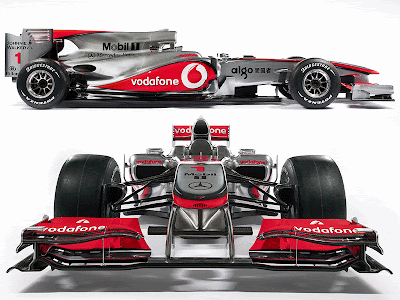
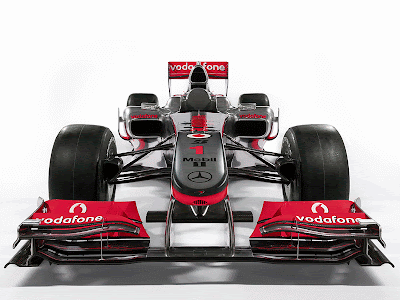
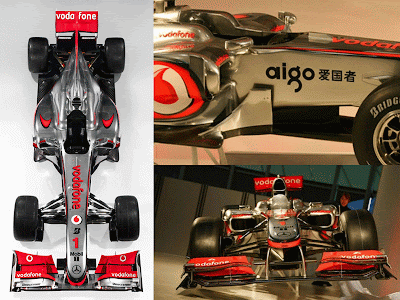
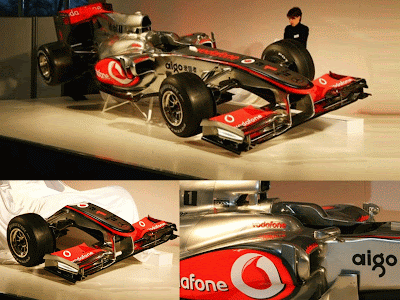
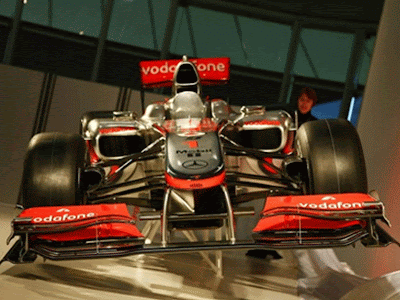
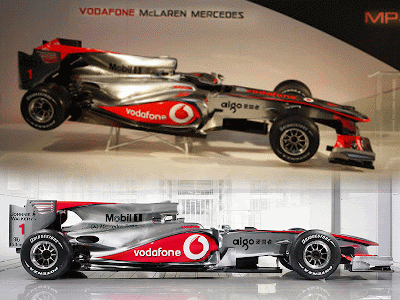
2010 McLaren MP4-25 Race Car

While yesterday was Ferrari's turn to present his car, McLaren did today. The team presented the MP4-25, the model that will run Lewis Hamilton and Jenson Button in the Formula 1 season starting on March 14 in Bahrain. The McLaren team that will be the last two world champions in Formula 1, Jenson Button and Lewis Hamilton. According to the company, the 'MP4-25', is a car that carries the British team has worked "more than ever" to tackle "an exciting year."
2010 McLaren MP4-25 Race Car   

The McLaren Mercedes team launched its new car for the 2010 season on Friday morning, with the target of clinching both titles after a mixed campaign in 2009. The Mercedes-powered MP4-25 was unveiled at Vodafone UK's headquarters in Newbury. The Vodafone McLaren Mercedes team revealed its brand new MP4-25 chassis – the car in which reigning world champion Jenson Button and 2008 world champion Lewis Hamilton will contest the 2010 FIA Formula 1 World Championship.
2010 McLaren MP4-25 Race Car   

Unveiled at Vodafone UK’s stunning headquarters in Newbury, the 2010 car looks noticeably different from last year’s race-winning MP4-24. MP4-25 features a radical aerodynamic overhaul and a significantly larger fuel tank to take full advantage of this year’s new regulations, and its design team is confident it has explored every possible avenue to maximise the car’s performance.
2010 McLaren MP4-25 Race Car   

Horsepower once again comes from our friends in Stuttgart. Mercedes-Benz’s FO 108X V8 subtly improves upon an engine that has become the benchmark in Formula 1, winning the last two drivers’ world championships.
2010 McLaren MP4-25 Race Car   

The team kicks off its 2010 campaign with a stunning driver pairing: 2009 world champion Jenson Button and 2008 world champion Lewis Hamilton. It is the first time since 1989 – when it ran Alain Prost and Ayrton Senna – that the team has fielded a joint-world champion driver line-up, and marks the first time in Formula 1 history that the sport’s two most recent world champions have been partnered together.
2010 McLaren MP4-25 Race Car   

However, the driver line-up represents only a fraction of the team’s remarkable strength in depth. Members of the design team who contributed to the development of MP4-25 can also trace their involvement back through an incredible seven of the team’s 12 drivers’ world championships, five of the team’s eight constructors’ world championships and 112 of the team’s 164 grand prix victories.
The Vodafone McLaren Mercedes team begins pre-season testing with MP4-25 at the Circuit de la Comunitat Valenciana Ricardo Tormo on Monday.

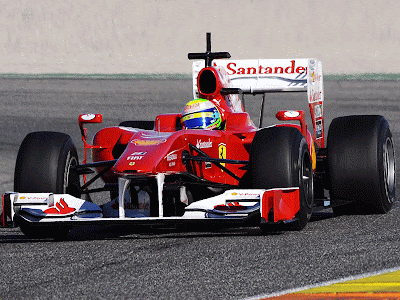
2010 Ferrari F10 Specifically to compete in the Formula 1 World Championship

Scuderia Ferrari unveiled today its 2010 challenger, the Ferrari F10. The F10 single-seater was presented with a new livery, with both the front and the rear wing white painted. The F10 is the fifty-sixth single-seater built by Ferrari, specifically to compete in the Formula 1 World Championship. The name of the car renews the tradition of being linked to the year in which it makes its debut in the Championship. The project, which went by the internal code number 661, represents the Scuderia's interpretation of the technical and sporting regulations which apply in 2010. 
2010 Ferrari F10  Formula 1

The rule clarifications issued by the FIA during the course of the previous season as regards to the diffuser have opened up new scenarious for the designers in terms of freeing up this area, thus representing the opportunity to deliver potentially great performance advantages. Compared to the F60, the F10 was obviously conceived with the aim of maximizing the aerodynamic performance of the double diffuser. Therefore the engine mountings to the chassis have been modified in a specific way and also redesigned is the shape of the gearbox casing and the rear suspension layout.
2010 Ferrari F10  Formula 1

It only takes a quick glance to note that the front part of the chassis is considerably higher than on last year's car and that the central upper and lower surfaces are hollowed out, in order to improve airflow. Another major rule change is that race refuelling is banned, which means the fuel cell has to be big enough to allow the car to get to the end of the race, whatever type of circuit. Inevitably, the car is longer to accommodate the new fuel tank and to allow the installation of longer and narrower radiators so that the sidepods have a smaller higher aperture with a more cut-out shape at the bottom. A further tapering as been achieved thanks to a revised and unconventional configuration of the exhausts.
2010 Ferrari F10  Formula 1

The need to start the race with a much heavier car than in the past has required a redesign of the basic characteristics of the braking system, carried out in conjunction with Brembo as well as a new design for the relevant cooling system.
2010 Ferrari F10  Formula 1

Safety levels have been increased thanks to the introduction of new crash tests of the rear bulkhead and the cell with a full load. In light of past incidents and the fact that pit stops will take less time, the wheel nuts have been updated so as to increase security when the car is sent back out on track.
2010 Ferrari F10  Formula 1

Before its track debut, the F10 underwent an intensive dynamic and static bench test program. Significant developments on all areas of the car are built into the program, not just in the run up to the opening round of Bahrain, but throughout the entire year. 
2010 Ferrari F10  Formula 1

As always, much attention has been paid to the performance and optimization of the materials used, at the design stage and through quality control, in an effort to extract the maximum level of performance combined with the highest possible safety levels.